

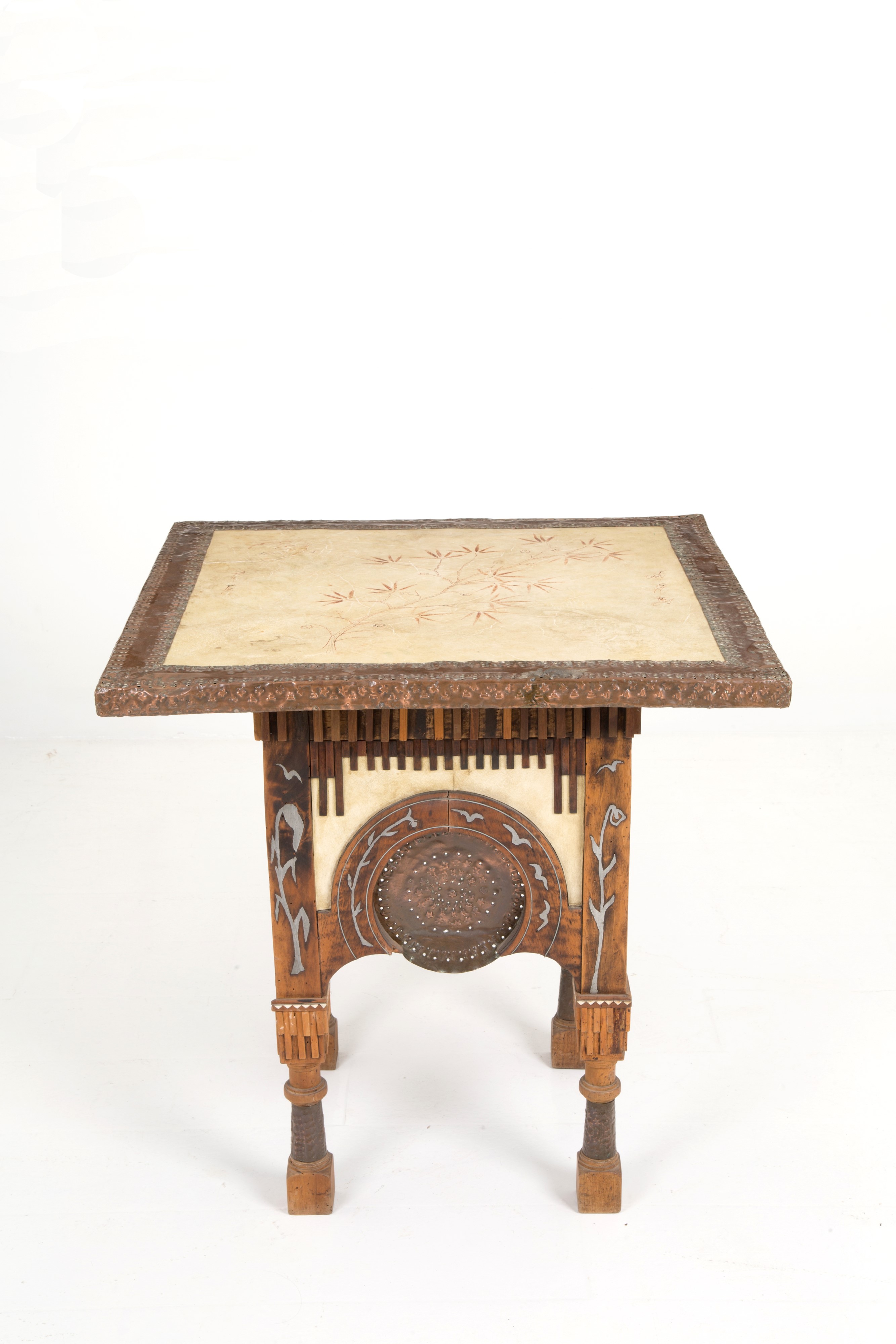



Few designers have left a mark as distinctive and unconventional as Carlo Bugatti (1856–1940). Unlike his contemporaries, who drew inspiration from classical European traditions, Bugatti embraced exoticism, asymmetry, and intricate craftsmanship to create furniture that was truly ahead of its time. His work, characterized by Moorish, Japanese, and Art Nouveau influences, remains one of the most collectible and recognizable in the world of decorative arts.
✔ A master of mixed materials, Bugatti combined wood, parchment, copper, and inlays to achieve rich textural contrasts.
✔ His designs defied symmetry, favoring organic, sculptural forms that looked more like pieces of art than traditional furniture.
✔ He blurred the line between East and West, incorporating elements from Orientalism, Islamic art, and Japanese aesthetics.
His creations, often described as futuristic yet historical, continue to captivate collectors and design enthusiasts.
The Iconic Cobra Chair (1902): A Bold Statement in Design
One of Bugatti’s most famous creations is the Cobra Chair, designed for the International Exhibition of Decorative Arts in Turin (1902). It exemplifies his ability to merge organic shapes with intricate craftsmanship.
✔ Material: Wood body covered in decorated vellum, hammered copper details, and delicate inlays.
✔ Form: The chair’s curved backrest and circular cutout give it a sculptural, almost surreal appearance.
✔ Influences: A mix of Art Nouveau fluidity and Middle Eastern ornamentation, making it one of the most original designs of its time.
✔ Symbolism: The looped backrest and rounded seat resemble the hood of a cobra, reinforcing the chair’s exotic appeal.
Why It Stands Out:
The Cobra Chair is not just a seat—it’s a piece of sculptural art. Unlike traditional chairs that emphasize function first, Bugatti prioritized aesthetic impact, making this chair an icon of early avant-garde design.
The Ornate Bugatti Bench (c. 1900): A Masterpiece of Orientalism
By the early 1900s, Bugatti’s style became increasingly inspired by Orientalism, a trend that romanticized Eastern design elements. His elaborate, throne-like bench, created around 1900, is one of his most opulent works.
✔ Material: Dark wood, gold detailing, tassels, and intricate inlay work.
✔ Form: The symmetrical design, with two large circular side panels and an arched back, is reminiscent of an exotic ceremonial throne.
✔ Decorative Elements: The heavy use of Arabesque and Moorish motifs, combined with tassels, gives the impression of a luxurious piece from an Ottoman palace.
✔ Cultural Fusion: The bench blends Western furniture construction with Eastern ornamentation, embodying the eclectic spirit of the time.
Why It Stands Out:
Bugatti’s bench is the perfect example of furniture as an artistic expression. It’s not just a functional piece—it’s a symbol of wealth, status, and artistic ambition. The use of rich materials and intricate patterns makes it one of the most visually stunning works in decorative arts history.
Bugatti’s Legacy: Beyond Furniture into Modern Design
Carlo Bugatti’s influence extends far beyond furniture design. His bold use of mixed materials, unconventional forms, and exotic inspirations paved the way for later Art Deco and modernist movements. His designs remain highly sought-after collector’s items, commanding high prices in auctions worldwide.
Why His Work Still Resonates Today:
✔ Unparalleled Craftsmanship: Each piece was meticulously handcrafted, ensuring uniqueness.
✔ Exotic Elegance: His mix of Moorish, Japanese, and Art Nouveau influences gives his furniture a timeless global appeal.
✔ Artistic Vision: Bugatti’s approach to furniture was more sculptural than functional, inspiring modern designers.
✔ Collector’s Dream: Authentic Bugatti pieces are among the most valuable and rare finds in historical furniture collecting.
Even today, his work continues to be celebrated in museum exhibitions and high-end interior design projects, proving that great design knows no boundaries.
Leave a Reply