

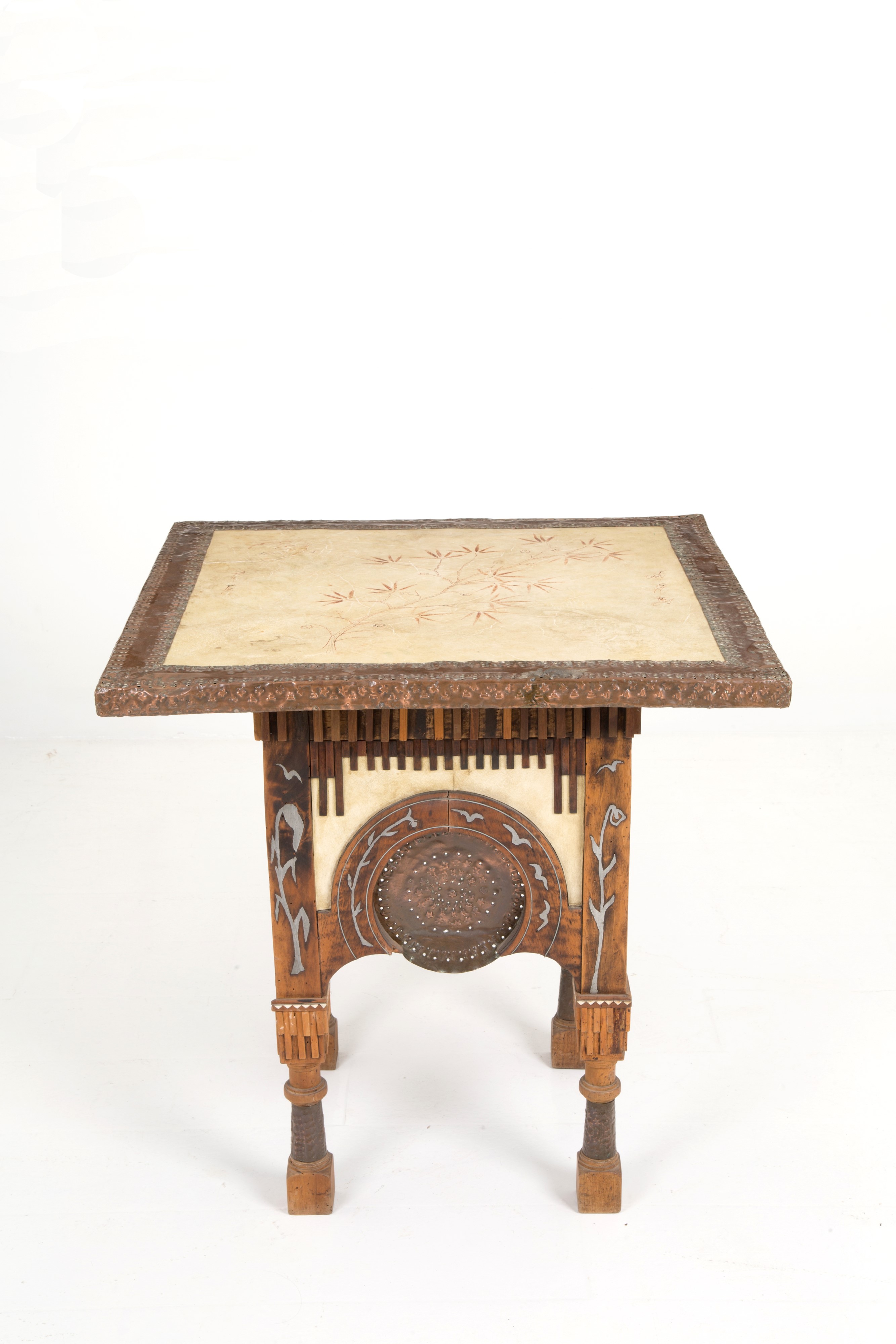



Introduction
The Arts & Crafts Movement, emerging in the late 19th century, was a direct response to the mass production of the Industrial Revolution. This movement emphasized handcrafted quality, natural materials, and historical influences, setting the foundation for modern furniture design. Among the leading figures in this revolution were:
✔ Leonard F. Wyburd, known for his Anglo-Egyptian inspired seating.
✔ George Jack, who combined traditional craftsmanship with modern upholstery.
✔ Philip Webb, a pioneer of functional, adjustable furniture.
Each of these designers brought a unique perspective, blending historical aesthetics with practicality, creating furniture that remains collectible and influential today.
Leonard F. Wyburd and the Influence of Egyptian Forms
Leonard F. Wyburd (1865–1958) was a key figure in Liberty & Co., one of London’s most important retailers of handcrafted furniture. Wyburd’s work stood out for its exotic influences, particularly from ancient Egyptian design.
Thebes Stool (c. 1902) – A Classic Reinterpretation
✔ Material: Carved mahogany with a smooth, polished finish.
✔ Inspiration: Based on ancient Egyptian stools, seen in tomb paintings and artifacts.
✔ Structure: Three gracefully curved legs supporting a slightly concave seat for ergonomic comfort.
✔ Historical Precedent: A similar stool design is housed in the British Museum, reinforcing its historical authenticity.
Why It Stands Out:
Wyburd’s Thebes Stool represents the fusion of ancient and modern design, making it a timeless piece still admired by collectors. Its minimalist structure makes it relevant even in contemporary interiors.
George Jack and the Mastery of Traditional Craftsmanship
George Jack (1855–1932) was a chief furniture designer at Morris & Co., a firm deeply associated with the Arts & Crafts Movement. His designs moved away from heavy ornamentation, embracing a simplified, elegant aesthetic.
Saville Armchair (c. 1890) – The Perfect Balance of Comfort and Craftsmanship
✔ Material: Mahogany with intricately turned spindles on the armrests.
✔ Upholstery: Features luxurious, handwoven Morris & Co. floral fabric, enhancing its artistic appeal.
✔ Influence: Inspired by simplified 18th-century forms, making it less rigid than earlier Arts & Crafts seating.
✔ Craftsmanship: The finely detailed spindles on the back and armrests demonstrate exceptional woodworking skill.
Why It Stands Out:
Jack’s work bridges the gap between traditional and modern seating, ensuring both historical charm and everyday usability. His Saville Armchair remains a sought-after piece for collectors of Arts & Crafts furniture.
Philip Webb: The Innovator of Functional Design
Philip Webb (1831–1915) is often regarded as the father of Arts & Crafts architecture and furniture. Unlike many of his contemporaries, Webb prioritized functionality over decoration, making him an early advocate of modernist principles.
Adjustable Armchair (c. 1865) – A Revolutionary Concept in Seating
✔ Material: Sturdy oak frame with Morris & Co. fabric upholstery.
✔ Adjustable Mechanism: One of the earliest reclining chairs, designed for versatility and comfort.
✔ Structure: Features a slanted backrest with a deep, cushioned seat, allowing for a relaxed seating posture.
✔ Influence: Inspired by traditional English country furniture, but adapted for modern needs.
Why It Stands Out:
Webb’s Adjustable Armchair was ahead of its time, introducing ergonomic innovation long before reclining chairs became mainstream. His focus on practicality and user comfort set a precedent for 20th-century furniture design.
The Legacy of Wyburd, Jack, and Webb in Modern Interiors
The influence of these three designers continues to be felt in contemporary furniture design. Their commitment to handcrafted quality, historical inspiration, and functional beauty aligns with today’s growing appreciation for sustainable and artisanal furniture.
Why Their Designs Are Still Relevant Today:
✔ Historical Depth: Their pieces reflect a rich cultural heritage, making them timeless.
✔ Superior Craftsmanship: Unlike mass-produced furniture, these works are built to last generations.
✔ Modern Appeal: The minimalist yet elegant designs fit seamlessly into contemporary interiors.
✔ Investment Value: Authentic Wyburd, Jack, and Webb pieces are highly sought after in auctions and private collections.
Leave a Reply